
Construction projects rarely go exactly as planned. Weather changes, labor shortages, material delays, and tight schedules can all slow progress. Because of these challenges, more builders are looking for practical ways to finish projects on time without giving up quality. Working with a reliable precast company in Greenville has become one of the smartest choices for contractors who want dependable concrete products that help keep construction moving. Precast concrete is manufactured before arriving at the job site, making installation faster and reducing many of the delays that traditional concrete work can face.
Instead of waiting for concrete to be mixed, poured, and cured on-site, builders can install ready-made components much sooner. This simple change helps many projects stay on schedule while keeping quality consistent.
Faster Construction Starts with Better Planning
One reason precast concrete has become more popular is because much of the work happens before the products reach the construction site. While crews prepare the site, precast products are already being manufactured.
This saves valuable time once installation begins and reduces interruptions that often slow projects.
Manufacturing happens before delivery.
Installation takes less time on-site.
Multiple project phases can move forward together.
Builders spend less time waiting for concrete to cure.
When planning is done properly, projects usually move much more smoothly.
Less Time Spent on the Job Site
Construction sites are busy places where many different crews work at the same time. The longer work continues, the greater the chance of scheduling conflicts and delays.
Precast concrete helps shorten the amount of time workers spend installing structural components.
Fewer on-site concrete operations
Reduced labor hours
Faster equipment use
Quicker project completion
Many contractors find this especially helpful when working under strict deadlines.
Consistent Product Quality
Concrete poured on-site can sometimes be affected by weather, temperature, or inconsistent mixing. These factors may lead to uneven results.
Precast products are manufactured in controlled conditions, helping improve consistency.
Better surface finish
Uniform strength
Consistent dimensions
Reliable production standards
Builders often prefer products that arrive ready to install with dependable quality.
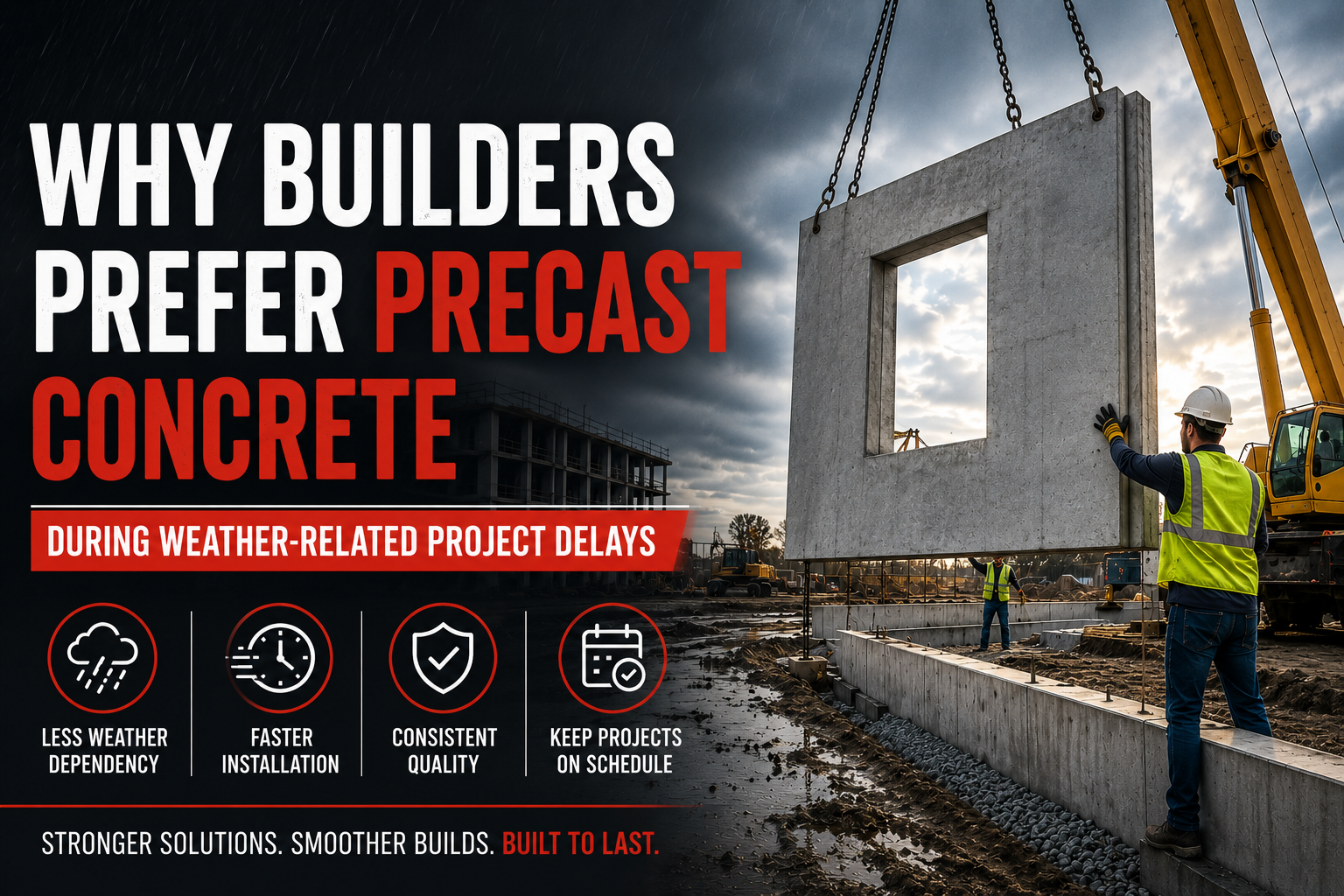
Weather Has Less Impact
Rain and extreme temperatures can slow traditional concrete work. Wet conditions may delay pouring, finishing, and curing.
Because precast products are already manufactured, weather usually affects only the installation process.
Fewer weather-related delays
Less waiting between project stages
More predictable scheduling
Improved project planning
This advantage becomes even more valuable during seasons with frequent rainfall.
Better Job Site Organization
Busy construction sites can quickly become difficult to manage when too many tasks happen at once.
Using precast products helps simplify the workflow by reducing several on-site concrete activities.
Less material storage
Cleaner work areas
Reduced equipment congestion
Easier coordination between crews
Good organization often leads to better productivity throughout the project.
Improved Safety During Construction
Construction safety is always a priority. Reducing unnecessary work on-site can help lower certain risks.
Since many concrete operations are completed before delivery, crews spend less time performing labor-intensive concrete work.
Fewer pouring operations
Reduced manual handling
Better equipment planning
Safer installation process
Proper planning and preparation continue to play an important role in maintaining safe work environments.
Lower Risk of Project Delays
Every delayed task can affect the next stage of construction. Even small setbacks often create scheduling problems for multiple contractors.
Precast concrete helps reduce several common causes of delay.
Faster deliveries
Shorter installation periods
Better scheduling flexibility
Improved workflow coordination
While no construction project is completely free from delays, precast solutions often remove many avoidable obstacles.
Works Well for Many Types of Projects
Precast concrete is no longer limited to large commercial developments. Today it is used in a wide variety of construction projects.
Builders use precast products for both residential and commercial applications.
Retaining walls
Concrete steps
Septic tanks
Custom concrete products
This flexibility makes precast a practical option for many different construction needs.
Why More Contractors Continue Choosing Precast
The construction industry has changed over the years. Labor shortages, tighter schedules, and rising costs have encouraged builders to look for more efficient methods.
Precast concrete continues gaining popularity because it solves several common construction challenges without adding unnecessary complexity.
Faster installation
Reliable product quality
Reduced labor requirements
Better schedule control
From experience, projects usually perform better when delays are reduced before construction even begins. Waiting until problems appear often costs far more than planning ahead.
Choosing the Right Precast Supplier Matters
Not every supplier offers the same level of quality, communication, or production capabilities. Selecting the right manufacturer is an important part of a successful project.
Experienced suppliers help contractors prepare for installation by delivering products that match project requirements.
Reliable production schedules
Accurate product dimensions
Strong concrete quality
Professional project support
Working with an experienced team often makes installation much easier from start to finish.
Conclusion
More builders are choosing precast concrete because it helps projects move faster without sacrificing durability or quality. From reducing labor demands to minimizing weather delays, precast products solve many of the challenges that slow traditional construction. Better planning, quicker installation, and dependable manufacturing all contribute to smoother project execution.
Whether the project is residential or commercial, precast concrete continues to prove its value in modern construction. For dependable precast solutions backed by experience and quality manufacturing, Garrett Precast remains a trusted choice for contractors and property owners alike.
Frequently Asked Questions
1. Why is precast concrete faster than traditional concrete?
Precast products are manufactured before arriving at the job site, reducing installation time and eliminating the need for on-site curing.
2. What types of projects use precast concrete?
Precast concrete is commonly used for retaining walls, septic tanks, steps, commercial buildings, bridges, and custom concrete structures.
3. Does precast concrete reduce labor costs?
Yes. Since much of the manufacturing is completed before delivery, fewer workers are needed for on-site concrete work.
4. Can precast concrete be installed during bad weather?
While severe weather can affect installation, precast products generally reduce weather-related delays compared to poured-in-place concrete.
5. Is precast concrete durable?
Yes. Precast concrete is manufactured under controlled conditions, producing strong, consistent, and long-lasting products.
6. Why do contractors prefer precast concrete?
Contractors value precast concrete because it saves time, improves scheduling, reduces on-site work, and delivers reliable quality throughout construction.
Write a comment ...