
Bad weather ruins more construction schedules than most people admit. One week of heavy rain can delay concrete pours, damage materials, and throw off every contractor working after that phase. Winter temperatures create curing problems. Summer heat dries concrete too fast. Even strong crews struggle when conditions turn unpredictable.
That’s one reason many contractors now rely on a trusted precast company in Spartanburg to keep projects moving during difficult weather conditions. Precast concrete gives builders more control when job sites become harder to manage.
According to the U.S. Department of Labor, weather-related delays are among the leading causes of lost construction productivity every year. Delays don’t just waste time—they increase labor costs, equipment expenses, and scheduling problems across the entire project.
Why Do Builders Prefer Precast During Weather Delays?
Builders prefer precast concrete because it reduces weather dependency.
Unlike traditional poured concrete, precast products are manufactured in controlled environments before arriving on-site. That means:
Less weather exposure
Faster installation
Fewer scheduling disruptions
Better consistency in difficult conditions
Instead of waiting days for conditions to improve, contractors can continue moving projects forward.
Traditional Concrete Depends Too Much on Weather
This is where many projects start falling behind.
Traditional cast-in-place concrete requires:
Proper temperatures
Dry conditions
Controlled curing time
Stable site access
Rain delays pours. Freezing temperatures weaken curing. Excessive heat creates finishing problems.
When schedules already feel tight, weather becomes a serious financial problem.
Precast Concrete Removes a Major Variable
What usually works in construction is reducing uncertainty wherever possible.
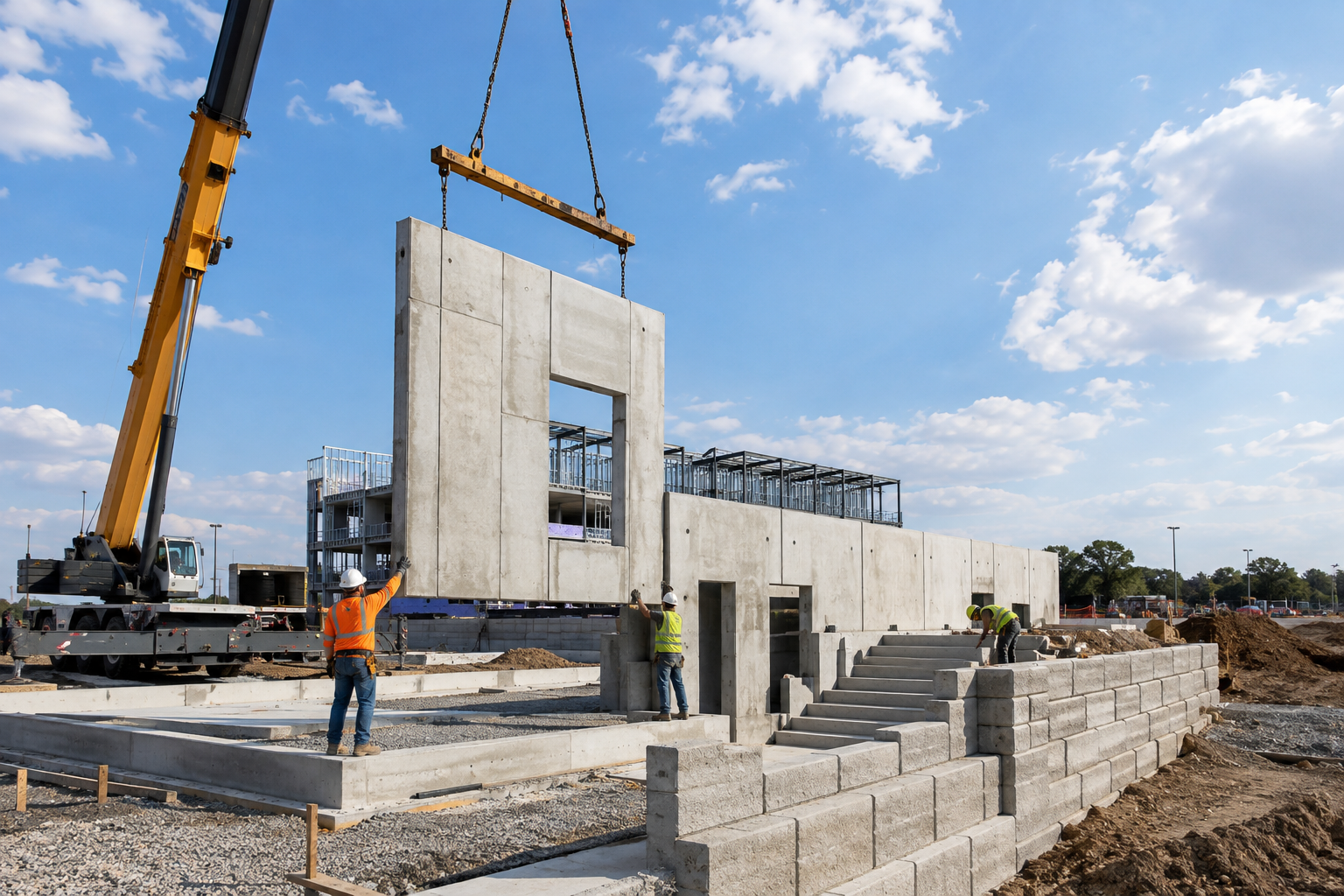
Precast helps because production happens indoors under controlled conditions. Concrete panels, retaining walls, slabs, and structural pieces are already cured before delivery.
That means builders spend less time worrying about:
Rain delays
Site moisture
Cold-weather curing
Surface damage during production
A reliable precast company in Spartanburg helps contractors avoid many of the weather-related issues that commonly slow projects down.
Faster Installation Helps Recover Lost Time
One storm can throw off an entire construction timeline.
The problem gets worse because every delay affects other trades too:
Framers wait
Electricians wait
Roofers wait
Inspectors reschedule
Precast installs much faster than traditional concrete because pieces arrive ready to place.
That speed helps projects recover after weather interruptions.
Less On-Site Work Means Fewer Delays
Traditional concrete work takes time:
Form setup
Reinforcement placement
Pouring
Finishing
Curing
Cleanup
Bad weather affects nearly every one of those steps.
Precast reduces how much work happens outdoors. Less exposure to site conditions means schedules become easier to manage.
That matters a lot during rainy seasons or winter construction.
Controlled Manufacturing Improves Quality
One thing that often fails during rushed weather recovery is quality control.
Crews feel pressure to catch up quickly. Concrete gets poured under poor conditions. Finishes become inconsistent.
Precast products are made inside controlled facilities where:
Temperature stays stable
Mix quality stays consistent
Curing conditions are monitored carefully
That creates stronger and more reliable finished products.
Why Builders Trust Precast for Retaining Walls and Site Work
Retaining walls often face some of the worst weather exposure on construction sites.
Heavy rain creates:
Soil movement
Erosion problems
Drainage pressure
Unsafe excavation conditions
Precast retaining wall systems help reduce installation time and simplify site stabilization.
Builders also prefer engineered systems because drainage planning is usually built into the design rather than improvised later.
Labor Shortages Make Weather Delays Worse
Construction labor shortages are already difficult enough.
Add bad weather to the mix and productivity drops even more.
Crews may:
Lose workdays
Rush installations
Fall behind on multiple projects at once
Precast reduces labor demands because much of the difficult work is completed before materials arrive on-site.
An experienced precast company in Spartanburg helps contractors simplify installation and reduce pressure on already stretched crews.
What Usually Works vs What Often Fails
What Usually Works
Early scheduling coordination
Engineered precast systems
Controlled production environments
Faster installation methods
What Often Fails
Weather-dependent pours
Last-minute site adjustments
Rushed curing processes
Trying to “make up time” after delays
Honest opinion here: weather delays themselves aren’t always the biggest problem. The real damage usually happens when contractors rush bad decisions afterward.
Precast helps avoid that pressure.
Why Precast Helps Keep Budgets Under Control
Time delays cost money fast.
Even small interruptions create:
Extra labor expenses
Equipment rental costs
Schedule conflicts
Project management headaches
Precast reduces uncertainty, which helps budgets stay more predictable.
That predictability matters more today because material costs and labor costs continue rising across the construction industry.
Builders Want More Predictable Construction
Modern construction moves fast. Clients expect shorter timelines and fewer surprises.
That’s why precast keeps becoming more popular on:
Commercial projects
Infrastructure work
Retaining wall systems
Residential developments
Site improvement projects
Builders aren’t just looking for strength anymore. They want systems that reduce delays and simplify construction management.
Why Local Precast Experience Matters
Weather conditions in South Carolina can shift quickly. Heavy rain, humidity, and temperature swings all affect construction schedules.
Working with a professional precast company in Spartanburg gives contractors access to solutions designed for local site conditions and regional construction needs.
Garrett Precast continues helping builders reduce delays with durable precast products built for efficient installation and long-term performance.
Conclusion: Better Planning Starts With Better Systems
Construction delays will always happen. Weather is impossible to control.
But builders can control how dependent their projects are on weather-sensitive processes.
Precast concrete helps reduce that dependency by moving critical production off-site and into controlled environments. Faster installation, better consistency, and fewer weather-related interruptions make projects easier to manage from start to finish.
That’s why more contractors continue choosing precast when schedules, budgets, and long-term durability matter most.
Key Takeaways
Precast reduces weather-related project delays
Controlled production improves consistency
Faster installation helps recover lost time
Less on-site labor reduces scheduling problems
Better planning leads to smoother construction projects
Frequently Asked Questions
1. Why is precast concrete better during bad weather?
Precast products are manufactured indoors, reducing delays caused by rain, heat, or freezing temperatures.
2. Does precast install faster than traditional concrete?
Yes. Precast components arrive ready to place, reducing installation and curing time.
3. Can precast reduce labor costs?
In many cases, yes, because less on-site work is required.
4. Is precast good for retaining walls during heavy rain?
Absolutely. Engineered precast retaining walls are designed for durability and drainage performance.
5. Why do builders prefer precast for tight schedules?
Precast improves predictability, reduces delays, and helps projects stay on track.
6. Does weather affect precast production?
Much less compared to traditional concrete because manufacturing happens in controlled environments.
Write a comment ...